





Math-Science Building (Hagener Science Center)
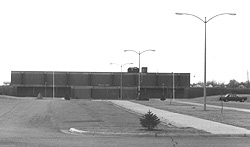
Math-Science Building seen from the parking lot
between Cowan Hall and the Armory Gym, circa 1968
The other building under construction in 1966 was the Math-Science Building. This structure was ready for occupancy in 1968. Designed by Great Falls architects Page and Werner, the building was designed to accommodate faculty offices, four chemistry, four biology, one physics and one earth science classroom. Glassed in display and storage areas were planned to open for viewing from the hallways on both the first and second floors.
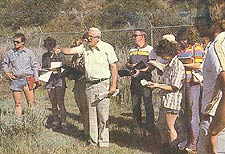
Lou Hagener, circa 1980
In 1987 the building was named the Hagener Science Center in memory of L. W. Hagener, long time faculty member and curator of many of the exhibits in the building. The Hagener Science Center covers 38,000 square feet. The lecture hall called the "Pit" seats 244 people and features the latest lighting and audiovisual equipment. One classroom was designed with a domed ceiling to facilitate the teaching of astronomy. A spiral staircase built within the room leads to the roof where a telescope could be mounted for extended observation of the night sky.
A computer center was established and located in an existing storage room in 1978. The center was moved to Cowan Hall in 1985 when an area on the east end of the first floor was remodeled to accommodate the equipment and staff.
Two classrooms on the second floor of the building were converted to student computer labs in the mid 1980s and, with the dawn of interactive telecommunications in the 1990s, two additional classrooms, as well as the "Pit," were wired and equipped for remote conferencing and the delivery of distance coursework through Montana's MetNet system and Northern's NorthNet venture with the local telephone cooperatives.
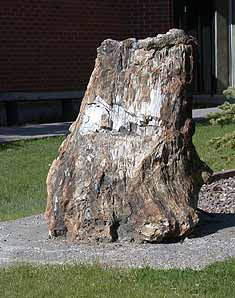
Petrified palm stump
A museum room in Pershing Hall had been authorized in 1951. Fossils and other display materials from this collection were moved and put on display in the new science building. Native American material donated to the college in the 1930s was added to the museum exhibit area in the hallways in 1969. The Runkel fossil collection and Wiltner Native American collection were donated to the college in the 1930s. These collections, along with those of L.W. Hagener and the college, comprise most of the museum's material. A large rock containing fossil materials and a petrified palm stump in front of this building enhances the science and museum concept of the facility.